Schedule C Form Guide
Schedule C is where sole proprietors and single-member LLC owners report their business income and expenses. The profit or loss is carried over to Form 1040 and is also used to work out self-employment tax on Schedule SE.
How to Fill Out a Schedule C Form?
- 1Click Fill Form. Schedule C opens in our editor, with its fillable fields shown in blue.
- 2Click a field to type, tick the boxes that apply, or add text, check marks and dates anywhere on the page.
- 3Click Download, choose PDF, Word or an image, name the file and save it.
What Is the Schedule C Form Used For?
Schedule C is where you report income or loss from a business you operated, or a profession you practiced, as a sole proprietor. The IRS treats an activity as a business when your main purpose is to earn income or a profit and you're involved in it with continuity and regularity. This version is for the 2026 tax year.
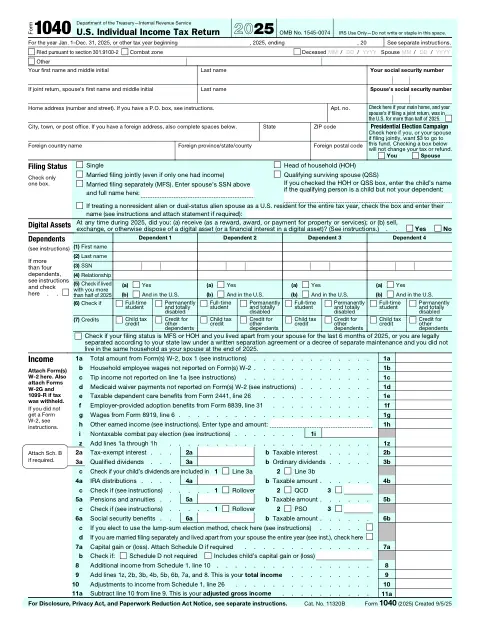
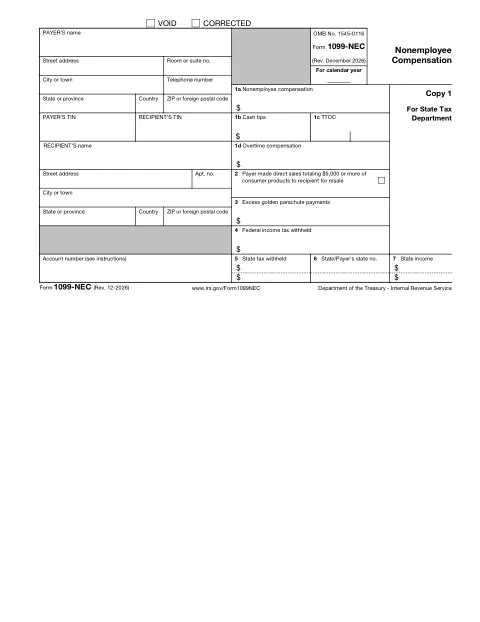
- Report gross receipts from your business, including amounts shown on Forms 1099-NEC, 1099-MISC, and 1099-K.
- Deduct business expenses, from advertising and supplies to car costs and business use of your home.
- Figure your cost of goods sold if you make, buy, or sell products.
- Report wages and expenses as a statutory employee.
- Report your share of a business you and your spouse run as a qualified joint venture.
Who fills it in
Freelancers, gig workers and small business owners who run a business on their own.
Where it goes
Attach it to your Form 1040 when you file.
When Might You Not Need Schedule C?
Not every kind of income belongs on Schedule C. A sporadic activity, a not-for-profit activity, or a hobby doesn't count as a business, and income from it is reported on Schedule 1 (Form 1040) instead. Farming profit or loss goes on Schedule F, and rental real estate and royalty income that isn't subject to self-employment tax goes on Schedule E.
If you and your spouse jointly own and run an unincorporated business and share the profits and losses, you are generally partners and file Form 1065, unless you elect qualified joint venture status or treat a business you own as community property as a sole proprietorship. A single-member LLC that has elected to be treated as a corporation also doesn't use Schedule C.
What If You Find a Mistake After Filing?
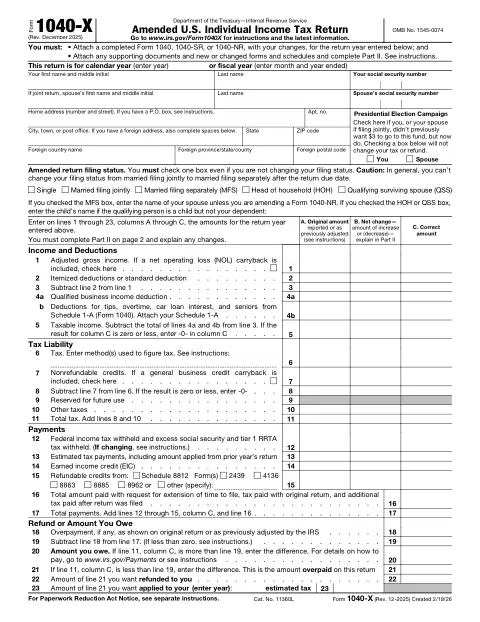
Schedule C is filed as part of your Form 1040, so to correct it you file Form 1040-X for that year. Attach the corrected Schedule C and any other form or schedule that changes as a result, and explain the change in Part II of Form 1040-X.
Because your net profit or loss also goes to Schedule SE, a change on Schedule C may mean you need a corrected Schedule SE as well.
Instructions for Filling Out the Schedule C Form
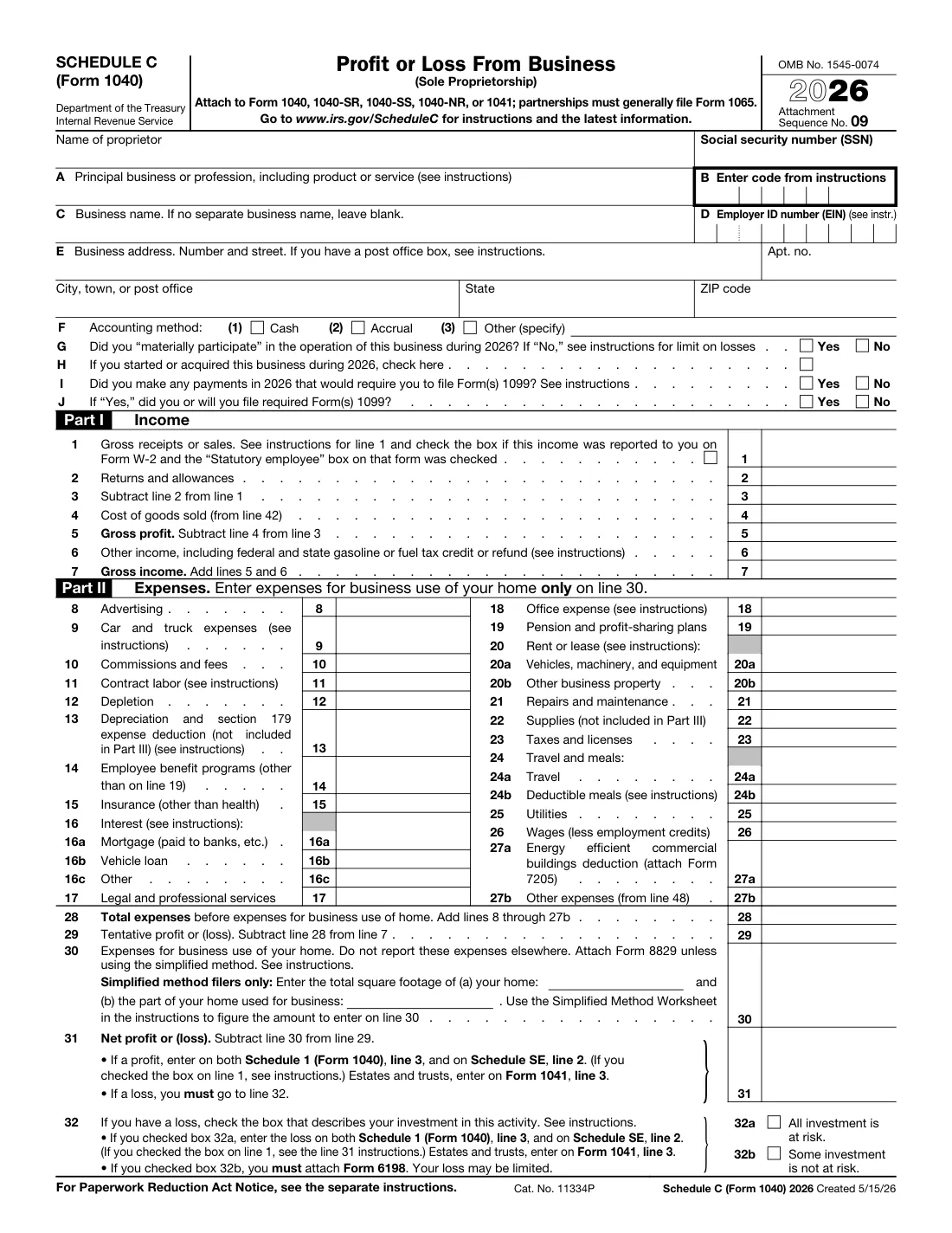
Fill in the business details first, then report income in Part I and expenses in Part II. Parts III to V on page 2 feed into page 1, so it helps to complete any of them you need before you total your expenses.
 Get form
Schedule C, 2 pages. View all pages
Business Information (Lines A to J)
- Top of page 1
- Name of proprietor and SSN: Enter your name and social security number. An estate or trust filing Form 1041 leaves the SSN box blank and enters its EIN on line D instead.
- Lines A and B
- Principal business and business code: On line A, describe the business that produced your line 1 income, giving the general field and the type of product or service. On line B, enter the six-digit code from the Principal Business or Professional Activity Codes chart at the end of the instructions.
- Line C
- Business name: Enter the name of your business. If it doesn't have a separate name, leave this line blank.
- Line D
- Employer ID number (EIN): Enter the EIN issued to you on Form SS-4, if you have one. Don't enter your SSN here, or another taxpayer's EIN, such as one shown on a Form 1099 you received.
- Line E
- Business address: Give a street address instead of a box number, including any suite or room number. If you ran the business from your home at the address shown on your tax return, you don't have to complete this line.
- Line F
- Accounting method: Check cash, accrual, or other. Under the cash method, you report income when you actually or constructively receive it and deduct expenses when you pay them. To change your method, you generally must file Form 3115.
- Line G
- Material participation: Check Yes if the activity isn't a rental and you meet at least one of the seven material participation tests in the instructions. If you check No, the activity is passive, and any loss may be limited.
- Line H
- Started or acquired in 2026: Check the box if you started or acquired the business in 2026. Also check it if you reopened the business after a temporary closure and didn't file a 2025 Schedule C for it.
- Lines I and J
- Forms 1099: Line I asks whether you made payments in 2026 that require you to file any Forms 1099, such as certain fees and other nonemployee compensation, rents, or royalties. If you answer Yes, line J asks whether you did or will file them.
Part I: Income
- Line 1
- Gross receipts or sales: Enter all gross receipts from the business, checking any Forms 1099 you received for business income that belongs here. If this income came from a Form W-2 with the "Statutory employee" box checked, check the box on this line.
- Line 2
- Returns and allowances: Enter, as a positive number, the cash or credit refunds you gave customers for returned products and any reductions in selling price.
- Lines 3 to 5
- Gross profit: Subtract line 2 from line 1, then subtract your cost of goods sold from line 42 to get your gross profit on line 5.
- Lines 6 and 7
- Other income and gross income: On line 6, enter business income not reported elsewhere in Part I, such as scrap sales, bad debts you recovered, interest on business accounts receivable, state gasoline or fuel tax refunds, and business-related prizes and awards. Line 7 adds lines 5 and 6.
Part II: Expenses
Enter each expense on the line that matches it. Expenses for business use of your home go only on line 30.
- Line 9
- Car and truck expenses: You can deduct either your actual expenses or the standard mileage rate. Report the business part of vehicle loan interest on line 16b, not here. You must also give information about the vehicle in Part IV or on Form 4562.
- Line 11
- Contract labor: Enter what you paid people you don't treat as employees, such as independent contractors, for services to your business. Wages paid to employees go on line 26 instead.
- Line 13
- Depreciation and section 179 expense deduction: Enter depreciation and any section 179 deduction not included in Part III. Attach Form 4562 if you're claiming depreciation on property placed in service in 2026, depreciation on listed property, or a section 179 deduction.
- Lines 16a to 16c
- Interest: Line 16a is mortgage interest on business real property paid to banks or other institutions that sent you a Form 1098. Line 16b is the business-use part of vehicle loan interest, and line 16c is other business interest.
- Line 24b
- Deductible meals: Enter the deductible part of your business meal costs, including meals while traveling away from home for business. Only a percentage of the cost is deductible, as the instructions explain. Don't include entertainment expenses.
- Lines 28 and 29
- Total expenses and tentative profit: Line 28 adds lines 8 through 27b. Subtract line 28 from line 7 to get your tentative profit or loss on line 29.
- Line 30
- Expenses for business use of your home: Figure this deduction on Form 8829 and attach it, or use the simplified method. Simplified method filers enter the total square footage of the home and of the part used for business, then use the Simplified Method Worksheet in the instructions. If you aren't using the simplified method, leave the square footage spaces blank.
- Line 31
- Net profit or (loss): Subtract line 30 from line 29. Enter a profit on both Schedule 1 (Form 1040), line 3, and Schedule SE, line 2. If you have a loss, you must go to line 32.
- Line 32
- At-risk investment: If you have a loss, check 32a if all your investment in the business is at risk, or 32b if some isn't. With 32b, attach Form 6198, because your loss may be limited. You can skip line 32 if line 7 is more than the total of lines 28 and 30.
Page 2: Parts III to V
- Part III
- Cost of goods sold (lines 33 to 42): Check how you value closing inventory (cost, lower of cost or market, or other, with an explanation) and answer line 34 about any change in method. Then enter beginning inventory, purchases, labor (not counting anything paid to yourself), materials, and other costs, and subtract ending inventory. The result on line 42 also goes on line 4.
- Part IV
- Information on your vehicle (lines 43 to 47b): Complete this part only if you claim car or truck expenses on line 9 and don't have to file Form 4562. Enter the date the vehicle was placed in service, your 2026 business, commuting, and other miles, and answer the questions about personal use and evidence. If you used more than one vehicle, attach a statement with the same details for each one.
- Part V
- Other expenses (line 48): List the type and amount of each business expense not included on lines 8 to 27a or line 30, then enter the total on line 48 and on line 27b. Don't include the cost of equipment or furniture, permanent improvements, charitable contributions, or personal expenses.
Tips for Filling Out the Schedule C Form
- Use one Schedule C for each business you run.
- Keep receipts and records for the expenses you deduct.
- Business use of your home and of a vehicle have their own sections and forms.
Fill Out Schedule C Online
The official form opens with its fields ready to type in. Free, no sign-up, no watermark.
Official PDF on irs.govGot Questions?
Do I need Schedule C for a side hustle?
If you earned money from a business or freelance work you run yourself, usually yes, even part time. The instructions explain when an activity is a hobby rather than a business.
Do I need an EIN to complete Schedule C?
Not always. You need one only if you have a qualified retirement plan, must file employment, excise, alcohol, tobacco, or firearms returns, or are a payer of gambling winnings. If you don't have an EIN, leave line D blank.
I have both statutory employee wages and self-employment income. Can I use one Schedule C?
No. You must file two Schedules C, one for each, because the amounts can't be combined. Statutory employee income goes on line 1 with the box on that line checked.
What if my Forms 1099-NEC show more than I report on line 1?
Attach a statement explaining the difference between the total in box 1a of your Forms 1099-NEC and the amount you report on line 1.
Do I have to keep an inventory?
If you qualify as a small business taxpayer under the instructions, you can choose not to keep an inventory, but you still need a method of accounting for inventory that clearly reflects income. If you do keep one, you generally value it each year to figure cost of goods sold in Part III.
Can I fill out Schedule C online for free?
Yes. Click Fill Form and Schedule C opens in our editor with its 109 fields ready to type in. When you are done, download it as a PDF, Word file or image. There is no account to create and no watermark.
Is this the official Schedule C?
Yes. It is the official PDF from the IRS website (2026), with its own fillable fields. Forms are updated from time to time, so check the version on the IRS website before you file.
PDFezy Reviews
No reviews yet. Used this form? Tell others how it went.