
W-8BEN-E Form Guide
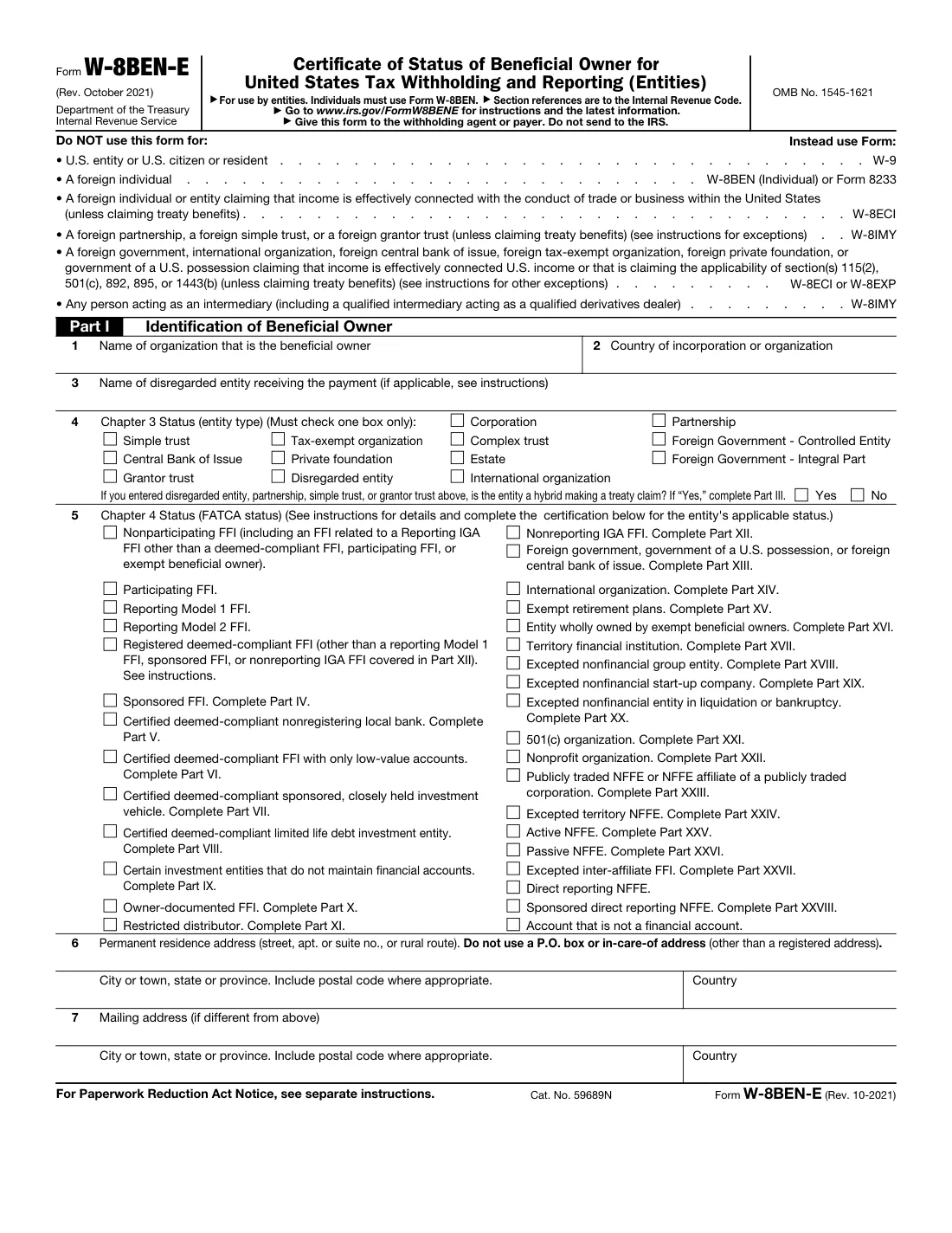
Form W-8BEN-E is the version of the W-8BEN for organizations. A company or other entity outside the US gives it to a US payer or financial institution to confirm that it is foreign, to state its FATCA status and to claim tax treaty benefits where they apply.
How to Fill Out a W-8BEN-E Form?
- 1Click Fill Form. Form W-8BEN-E opens in our editor, with its fillable fields shown in blue.
- 2Click a field to type, tick the boxes that apply, or add text, check marks and dates anywhere on the page.
- 3Click Download, choose PDF, Word or an image, name the file and save it.
What Is the W-8BEN-E Form Used For?
Foreign entities use Form W-8BEN-E to document their status under chapter 3 of the Internal Revenue Code, which covers withholding on US-source income paid to foreign persons, and chapter 4, known as FATCA. Foreign persons are generally taxed at 30% on US-source income such as interest, dividends, rents, royalties and annuities, and that tax is usually collected by withholding. A withholding agent can rely on a properly completed W-8BEN-E to treat payments as made to a foreign beneficial owner and, where it applies, to reduce or remove that withholding.
- Showing that the entity is the foreign beneficial owner of the income
- Stating the entity's FATCA (chapter 4) status to avoid 30% withholding on withholdable payments
- Claiming a reduced rate of, or exemption from, withholding under an income tax treaty (Part III)
- Documenting the entity's status when it holds an account with a foreign financial institution (FFI)
- Claiming an exception from Form 1099 reporting and backup withholding on items like broker proceeds and bank deposit interest
Who fills it in
Companies, partnerships and other entities outside the US that receive payments from the US.
Where it goes
Give it to the payer or financial institution that asked for it. Don't send it to the IRS.
When Should an Entity Not Use Form W-8BEN-E?
Don't use a W-8BEN-E for a US entity or a US citizen or resident; they give Form W-9. Foreign individuals use Form W-8BEN or Form 8233, and anyone acting as an intermediary, such as an agent, nominee or custodian, uses Form W-8IMY.
Unless they are claiming treaty benefits, some other foreign entities also use a different form: Form W-8ECI for income effectively connected with a US trade or business, Form W-8IMY for a foreign partnership, simple trust or grantor trust, and Form W-8EXP or W-8ECI for a foreign government, international organization, central bank of issue or foreign tax-exempt organization claiming certain Code exemptions.
When Should You Give a New W-8BEN-E?
If a change in circumstances makes any information on the form incorrect for chapter 3 or chapter 4 purposes, you must notify the withholding agent or financial institution within 30 days. By signing, the entity agrees to give a new form within 30 days of such a change. For example, if income covered by the form becomes effectively connected with a US trade or business, the W-8BEN-E is no longer valid for it.
Without changes, a W-8BEN-E generally stays valid from the date it is signed until the last day of the third calendar year after that year, so a form signed on September 30, 2014, remains valid through December 31, 2017. For an FFI claiming its status under an intergovernmental agreement (IGA), a change in circumstances also includes its jurisdiction being removed from the IGA list or the jurisdiction's FATCA status changing, for example from Model 2 to Model 1.
Instructions for Filling Out the W-8BEN-E Form
Here is what each line asks for. The lines in Part I apply to every entity, while Parts II to XXIX only apply when the entity's situation calls for them.
 Get form
Form W-8BEN-E, 8 pages. View all pages
Part I: Identification of Beneficial Owner
- Line 1
- Name of organization that is the beneficial owner: Enter the entity's legal name. A disregarded entity or branch enters the legal name of its owner (or of the entity it is part of), not its own business name, unless it is a hybrid entity making a treaty claim.
- Line 2
- Country of incorporation or organization: A corporation enters its country of incorporation. Any other entity enters the country under whose laws it was created, organized or governed.
- Line 3
- Name of disregarded entity receiving the payment: Complete this line only in limited cases. A disregarded entity receiving a withholdable payment enters its name here if it has a GIIN under its own legal name, is a reporting Model 1 or Model 2 FFI, and isn't a hybrid entity claiming treaty benefits.
- Line 4
- Chapter 3 status (entity type): Check one box for the entity's classification under US tax principles, not under the law of a treaty country. Only section 501(c) organizations check "Tax-exempt organization," and a private foundation checks "Private foundation" instead. If you check disregarded entity, partnership, simple trust or grantor trust, also answer whether the entity is a hybrid making a treaty claim; if "Yes," complete Part III.
- Line 5
- Chapter 4 status (FATCA status): Check the one box for the entity's FATCA status. You only need to give a chapter 4 status if the entity receives a withholdable payment or is documenting an account it holds with an FFI that asked for the form. Most statuses point you to a part to complete, such as Part XXV for an active NFFE or Part XXVI for a passive NFFE.
- Line 6
- Permanent residence address: Enter the address in the country where the entity is a resident for that country's income tax. Don't use a P.O. box, a mailing-only address or a financial institution's address unless it is the entity's registered address. If the entity has no tax residence anywhere, use its principal office.
- Line 7
- Mailing address: Fill this in only if it is different from line 6.
- Line 8
- US taxpayer identification number (TIN), if required: Enter the entity's US employer identification number (EIN) if it needs one, for example if it is a partner in a partnership that conducts a US trade or business, or if it claims treaty benefits without a foreign TIN on line 9b. If you need an EIN, apply on Form SS-4 or online.
- Line 9a
- GIIN: Enter the entity's global intermediary identification number (GIIN), the number the IRS assigns when an entity registers for chapter 4. It is required for statuses such as participating FFI, registered deemed-compliant FFI, reporting Model 1 or Model 2 FFI and direct reporting NFFE. If registration is in process, you may write "applied for," but the requester must receive and verify your GIIN within 90 days.
- Line 9b
- Foreign TIN: Enter the tax ID number from the entity's country of tax residence. It is required if the entity is documenting a financial account at a US office of a financial institution and receives US-source income reported on Form 1042-S, unless an exception applies, such as a country that doesn't issue foreign TINs. You can also give it instead of a US TIN to claim treaty benefits.
- Line 9c
- Check if FTIN not legally required: Check this box if line 9b would apply but the entity isn't legally required to get a foreign TIN from its country, including if the country doesn't issue them.
- Line 10
- Reference number(s): Optional. You can enter the number of the account the form is for, or other reference information. The single owner of a disregarded entity can use this line to tell the withholding agent that the account is in the entity's name.
Part II: Disregarded Entity or Branch Receiving Payment
Complete Part II only for a disregarded entity with its own GIIN that receives a withholdable payment, or for a branch of an FFI in a country other than the FFI's country of residence.
- Line 11
- Chapter 4 status of disregarded entity or branch: Check the one box that applies. If no box applies, you don't need to complete this part.
- Line 12
- Address of disregarded entity or branch: Enter the address of the branch or disregarded entity. Don't use a P.O. box or in-care-of address, other than a registered address.
- Line 13
- GIIN (if any): If you checked reporting Model 1 FFI, reporting Model 2 FFI or participating FFI, enter the GIIN of the branch that receives the payment. A disregarded entity that completed line 3 enters its own GIIN here, not on line 9a.
Part III: Claim of Tax Treaty Benefits
Complete Part III only if the entity claims a reduced rate of, or exemption from, withholding under an income tax treaty.
- Line 14a
- Treaty residence: Enter the country where the entity is a resident for treaty purposes, and check the box.
- Line 14b
- Income derived and limitation on benefits: Check the box to certify that the entity derives the income and meets the treaty's limitation on benefits (LOB) provision, if it has one. Then check the one LOB type that applies, or "No LOB article in treaty."
- Line 14c
- Qualified resident status: This is only for a foreign corporation claiming benefits under a treaty that entered into force before January 1, 1987 (and hasn't been renegotiated) on certain US-source dividends or interest from another foreign corporation. For treaties that entered into force after December 31, 1986, use line 14b instead.
- Line 15
- Special rates and conditions: Use this only if the treaty benefit requires conditions not covered by line 14, such as a lower dividend rate based on ownership percentage and holding period. Enter the treaty article and paragraph, the rate and the type of income, then explain the conditions the entity meets.
Parts IV to XXVIII: Chapter 4 (FATCA) Status Certifications
Complete only one of these parts, the one that matches the box you checked on line 5.
- Parts IV to XXVIII
- Which part to complete: You don't need any of these parts if the entity isn't the payee of a withholdable payment and doesn't hold an account with the FFI requesting the form. Entities that checked nonparticipating FFI, participating FFI, registered deemed-compliant FFI (other than a sponsored FFI), reporting Model 1 or Model 2 FFI, or direct reporting NFFE (other than a sponsored one) also skip them.
- Line 39
- Active NFFE (Part XXV): Check the box to certify that the entity is a foreign entity that isn't a financial institution, that less than 50% of its gross income for the preceding calendar year is passive income, and that less than 50% of its assets produce or are held to produce passive income. Passive income includes dividends, interest, rents, royalties and annuities.
- Lines 40a to 40c
- Passive NFFE (Part XXVI): Check line 40a, then check 40b if the entity has no substantial US owners, or 40c if it does. If you check 40c, list each substantial US owner in Part XXIX.
Part XXIX: Substantial U.S. Owners of Passive NFFE
- Part XXIX
- Name, address and TIN: Enter the name, address and TIN of each substantial US owner, generally a specified US person who owns more than 10% of the entity. You may attach a separate statement instead. An NFFE giving the form to a reporting Model 1 or Model 2 FFI may also list its controlling US persons here.
Part XXX: Certification
- Part XXX
- Capacity to sign: You must check this box to certify that you have the legal capacity to sign for the entity on line 1.
- Sign Here
- Signature, print name and date: An authorized representative or officer of the entity signs, prints their name and dates the form (MM-DD-YYYY). An agent signing under a power of attorney must attach it, and Form 2848 can be used. A withholding agent may accept an electronic signature, but typing a name in the signature line isn't enough.
Tips for Filling Out the W-8BEN-E Form
- Most entities only fill in Part I, the one part for their FATCA status, a treaty claim if they have one, and the signature in Part XXX.
- Have the company's foreign tax ID number ready, and its GIIN if it has one.
- Individuals use Form W-8BEN instead.
Fill Out Form W-8BEN-E Online
The official form opens with its fields ready to type in. Free, no sign-up, no watermark.
Official PDF on irs.govGot Questions?
Which parts of Form W-8BEN-E do I fill in?
Part I for every entity, then only the part for your FATCA status, Part III if you claim a treaty benefit, and the certification in Part XXX.
What happens if the entity doesn't provide a W-8BEN-E?
The withholding agent may have to withhold tax at a 30% rate or at the backup withholding rate. Give the form before the payment is made, credited or allocated.
Does a disregarded entity fill out its own W-8BEN-E?
Generally, no. Its single owner gives the form: a foreign owner uses Form W-8BEN or W-8BEN-E, and a US owner uses Form W-9. A disregarded entity may use its own W-8BEN-E only in limited cases, such as documenting its chapter 4 status for an account with an FFI or claiming treaty benefits as a hybrid entity.
Do we need a separate W-8BEN-E for each payer?
Generally, yes. A separate form usually goes to each withholding agent, and a withholding agent may ask for one for each type of income if you claim different benefits.
What if the GIIN or foreign TIN doesn't fit on line 9a or 9b?
You may use a smaller font. If it still doesn't fit, you can write it elsewhere on the form or on an attached sheet, as long as it is clearly marked as the number for line 9a or 9b.
Can I fill out Form W-8BEN-E online for free?
Yes. Click Fill Form and Form W-8BEN-E opens in our editor with its 179 fields ready to type in. When you are done, download it as a PDF, Word file or image. There is no account to create and no watermark.
Is this the official Form W-8BEN-E?
Yes. It is the official PDF from the IRS website (Rev. October 2021), with its own fillable fields. Forms are updated from time to time, so check the version on the IRS website before you file.
PDFezy Reviews
No reviews yet. Used this form? Tell others how it went.
Related Forms
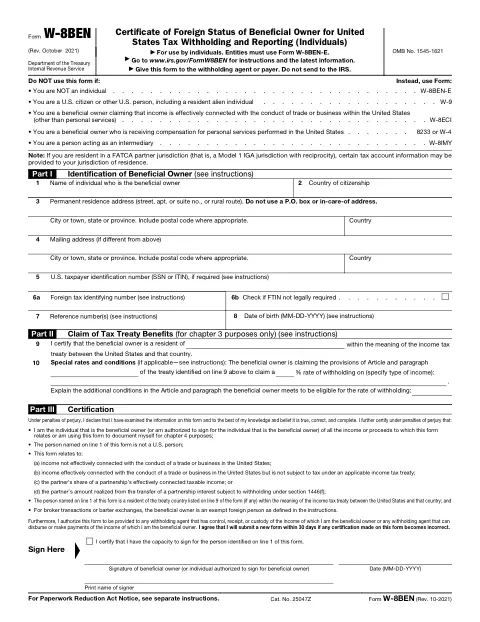 View formInternationalForeign StatusForm W-8BENCertificate of Foreign Status of Beneficial Owner for United States Tax Withholding and Reporting (Individuals)
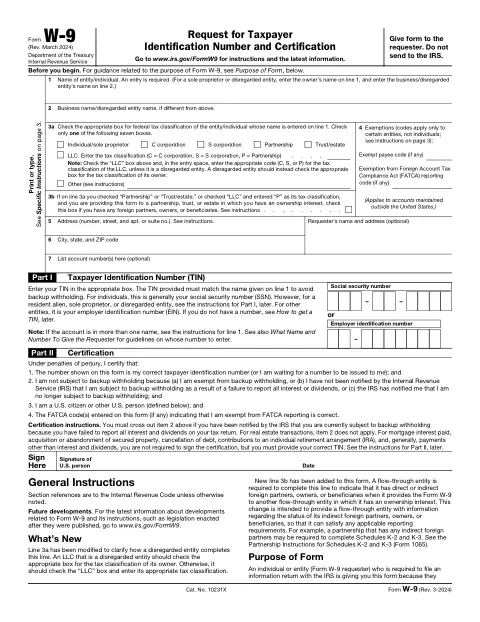 View formEmploymentContractorsForm W-9Request for Taxpayer Identification Number and Certification
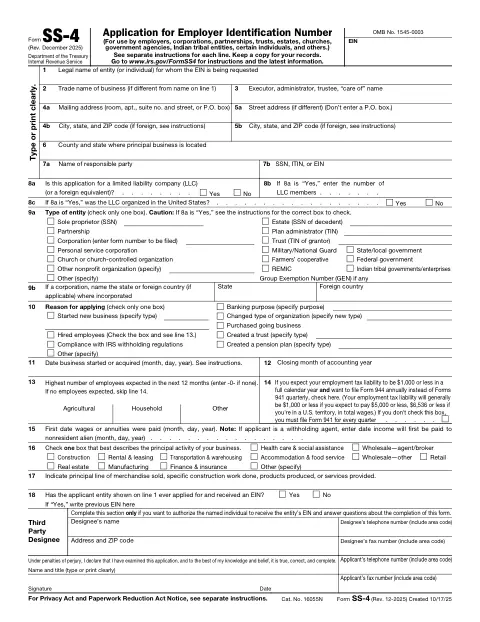 View formBusiness & FinanceBusiness SetupForm SS-4Application for Employer Identification Number